

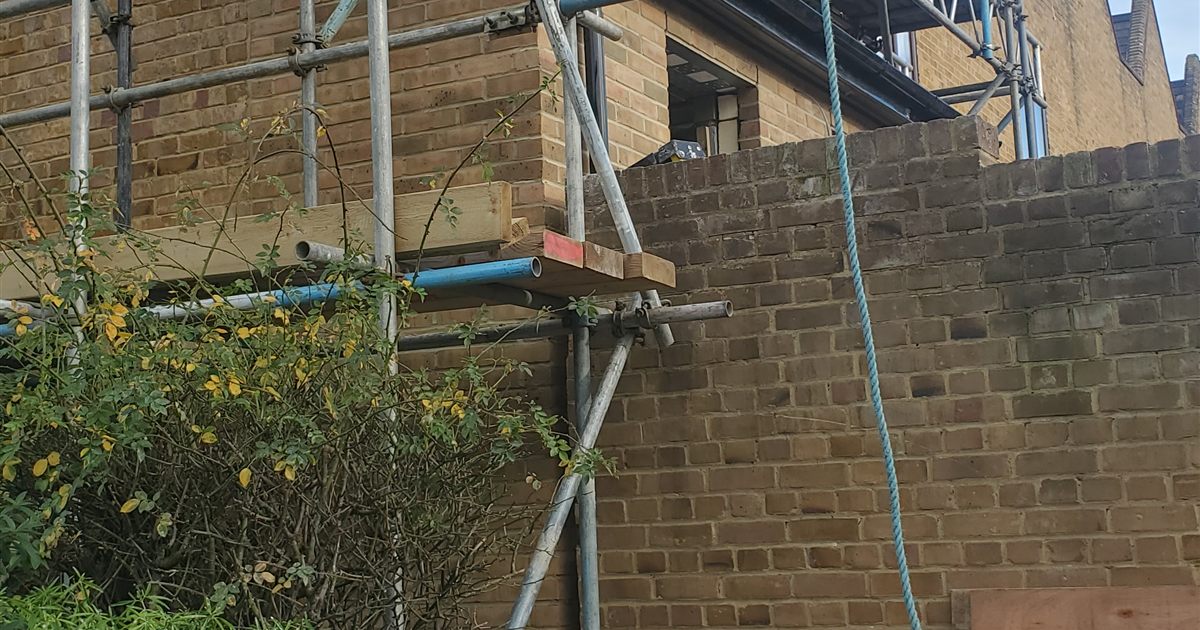
If you live in a London terrace or semi-detached house, almost any extension, loft conversion or basement will affect a wall you share with your neighbour. Before work starts, the Party Wall etc. Act 1996 requires you to tell your neighbours in writing, and in many cases to agree how the work will be carried out. Getting this right early protects your programme, your budget and your relationship with the people next door.
What is a party wall?
A party wall is a wall shared by two properties, such as the dividing wall between two terraced or semi-detached houses. The Act also covers party fence walls (garden walls standing on the boundary) and party structures, such as floors between flats. In the Act, you are the building owner and your neighbour is the adjoining owner.
When do you need a party wall notice?
You need to serve a notice for three main types of work:
- Work on an existing party wall: for example cutting into it to insert steel beams for a loft conversion or a kitchen extension, raising it, thickening it, underpinning it or removing chimney breasts attached to it. This needs a party structure notice at least two months before work starts.
- Building a new wall on or at the boundary: for example the side wall of a rear extension built on the line of junction. This needs a line of junction notice at least one month before work starts.
- Excavating near your neighbour’s foundations: digging within 3 metres of their building and deeper than its foundations, or within 6 metres where the excavation would cut a 45-degree line drawn down from their foundations. This needs a notice of adjacent excavation at least one month before work starts, and it often applies to rear extensions and basements.
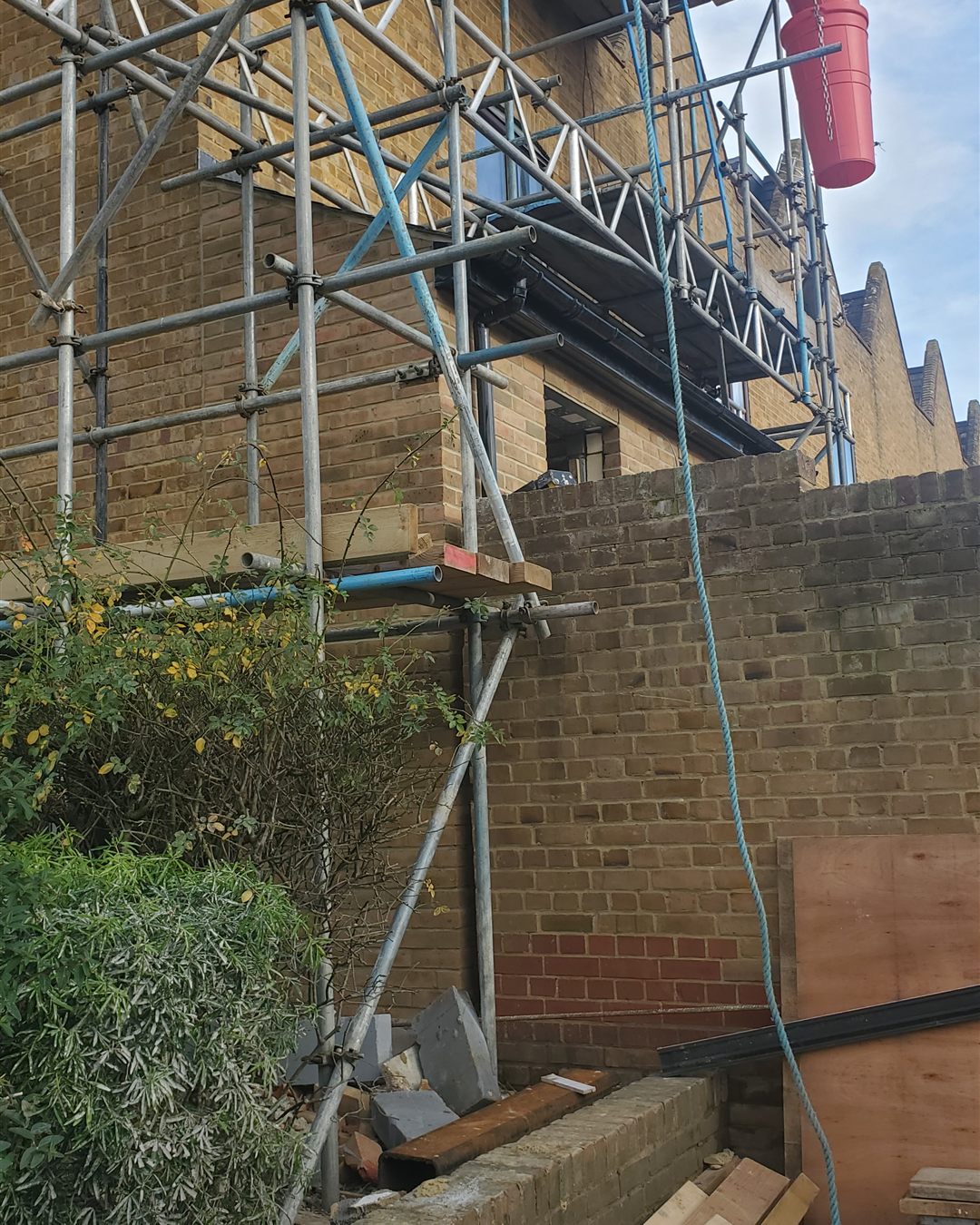
Minor work such as drilling to fix shelves or cabinets, or replastering, does not usually need a notice. If in doubt, ask your architect or a party wall surveyor.
What happens after you serve the notice?
Your neighbour has 14 days to respond. They can:
- consent to the work, in which case you can proceed in line with the notice; or
- dissent, in which case a dispute arises and surveyors are appointed.
For work on the party wall and for excavations, if your neighbour does not reply within 14 days the Act treats it as a dispute.
When there is a dispute, both owners can appoint one agreed surveyor, or each owner appoints their own surveyor and the two surveyors select a third surveyor in case they disagree. The surveyors prepare a party wall award: a legal document that describes the work, how and when it can be carried out, and usually includes a schedule of condition of your neighbour’s property, recorded before work starts. The building owner normally pays the reasonable costs of the surveyors.
Good to know: a party wall notice lapses if the work does not start within 12 months, and a party wall award can be appealed in the county court within 14 days of being served.
Party wall, planning permission and Building Regulations: three different things
The Party Wall Act is separate from planning permission and from Building Regulations approval. Having planning permission, or building under permitted development, does not remove the need to serve party wall notices, and a party wall award does not replace the other approvals. Most extensions and loft conversions need all three to be considered.
How long does the party wall process take?
It depends on your neighbours. With consent, the minimum notice periods (one or two months) apply. If surveyors are appointed, allow additional time for the schedule of condition and the award. This is why we recommend thinking about party walls during the design stage, not when the builder is ready to start.
How an architect helps with party walls
At LP ARKinnovation we consider party wall matters from the very first stage of a project:
- in the feasibility and concept stage we identify which works are likely to involve the party wall or excavations near neighbouring buildings;
- we prepare the drawings the notices and the surveyors need, coordinated with the structural engineer;
- we coordinate the party wall surveyor with the rest of the design team and include the party wall timeline in the project programme, so the start on site is not delayed.

You can read more about how we organise each stage in RIBA Stages Explained: How We Work and in our article on kitchen extensions in London.
From our projects
- Tower Hill, London: a rear extension to create a larger kitchen and living area, a full loft conversion adding two bedrooms and a bathroom, and the complete internal reconfiguration of the house, stripped back to brick with a new staircase while retaining the main beams on the first and second floors.
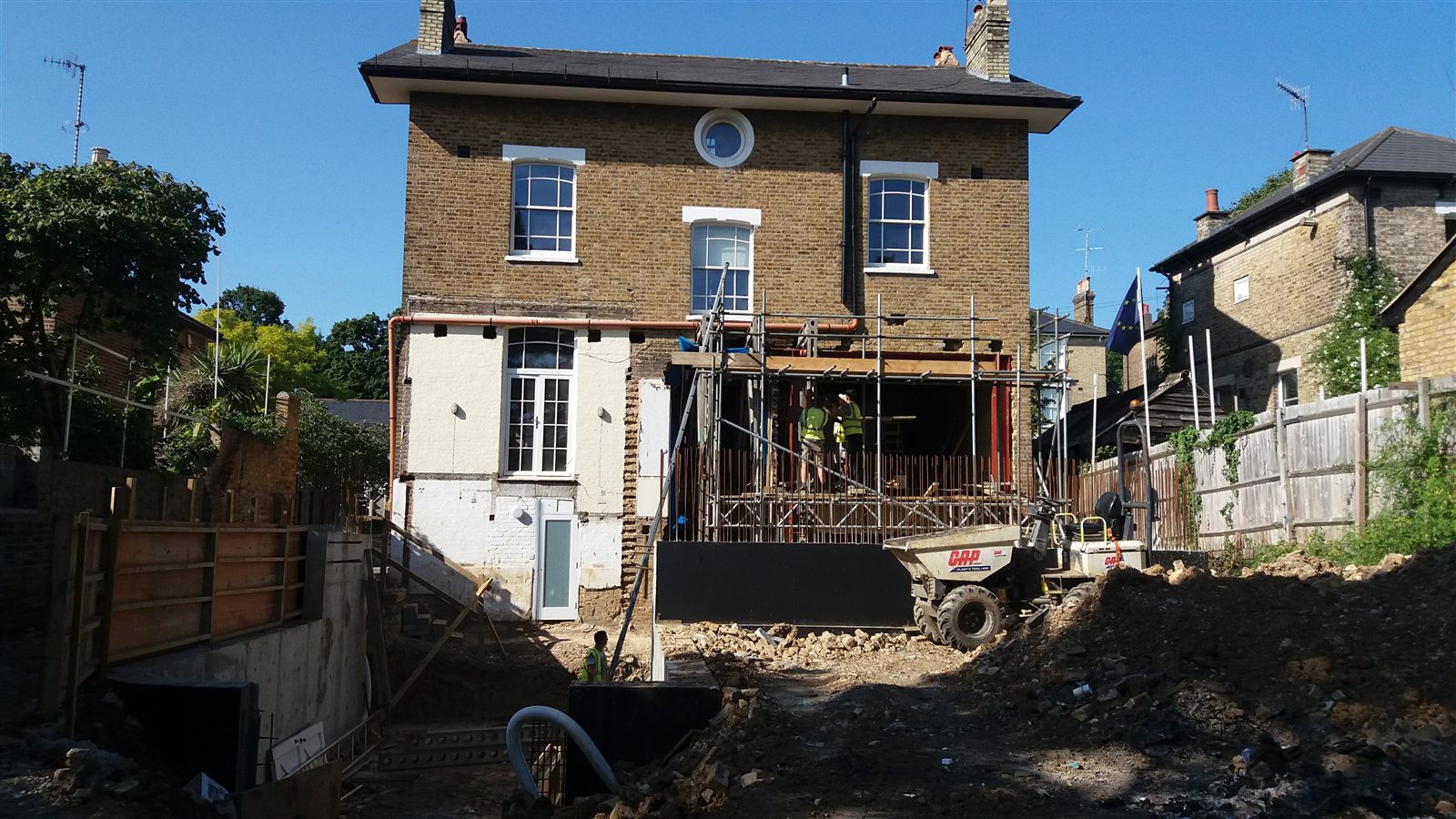
- Kingston upon Thames (in collaboration with Conrad Margoles): a two-storey rear extension at lower ground and ground floor level, a new outbuilding and the full refurbishment of the house.
Works like these, with new steel beams, loft conversions and excavations for lower ground floors, are typical of the projects where the Party Wall Act needs to be considered early in the design.
Tips for a smooth process with your neighbours
- Talk to your neighbours before you serve notice. Show them the drawings and explain the timing: a friendly conversation often leads to consent.
- Serve notices early, as soon as the design and structure are clear.
- Keep a record of the condition of shared walls with photographs before work starts.
- Choose an experienced party wall surveyor, and agree a single surveyor if your neighbour is happy to do so.
For the official guidance, see the GOV.UK page Party Wall etc. Act 1996: guidance.
Party Wall Agreements: Frequently Asked Questions
Do I need a party wall agreement for a rear extension?
Often yes: if the extension is built on the boundary line, or its foundations are dug within 3 metres of your neighbour’s building and deeper than their foundations, you must serve notice under the Party Wall Act.
Do I need a party wall agreement for a loft conversion?
Usually yes, because steel beams are often supported on the party wall, which requires a party structure notice at least two months before work starts.
What happens if my neighbour does not respond to the notice?
If there is no response within 14 days, a dispute is deemed to have arisen and surveyors must be appointed to agree a party wall award.
Who pays for the party wall surveyor?
The building owner, meaning the person carrying out the work, normally pays the reasonable costs of the surveyors, including the surveyor appointed by the neighbour.
Can I start work before the party wall award is agreed?
You should not start notifiable work until your neighbour has consented or an award is in place. Starting early can lead to an injunction and delays.
Is the party wall process the same as planning permission?
No. Party wall matters, planning permission and Building Regulations are three separate processes, and most extensions need all three to be considered.
Planning an extension or loft conversion? Book your complimentary initial consultation with RIBA Chartered Architect Lucia Piccinini. You can also read our guide to kitchen extensions in London or explore our house extensions service.
