
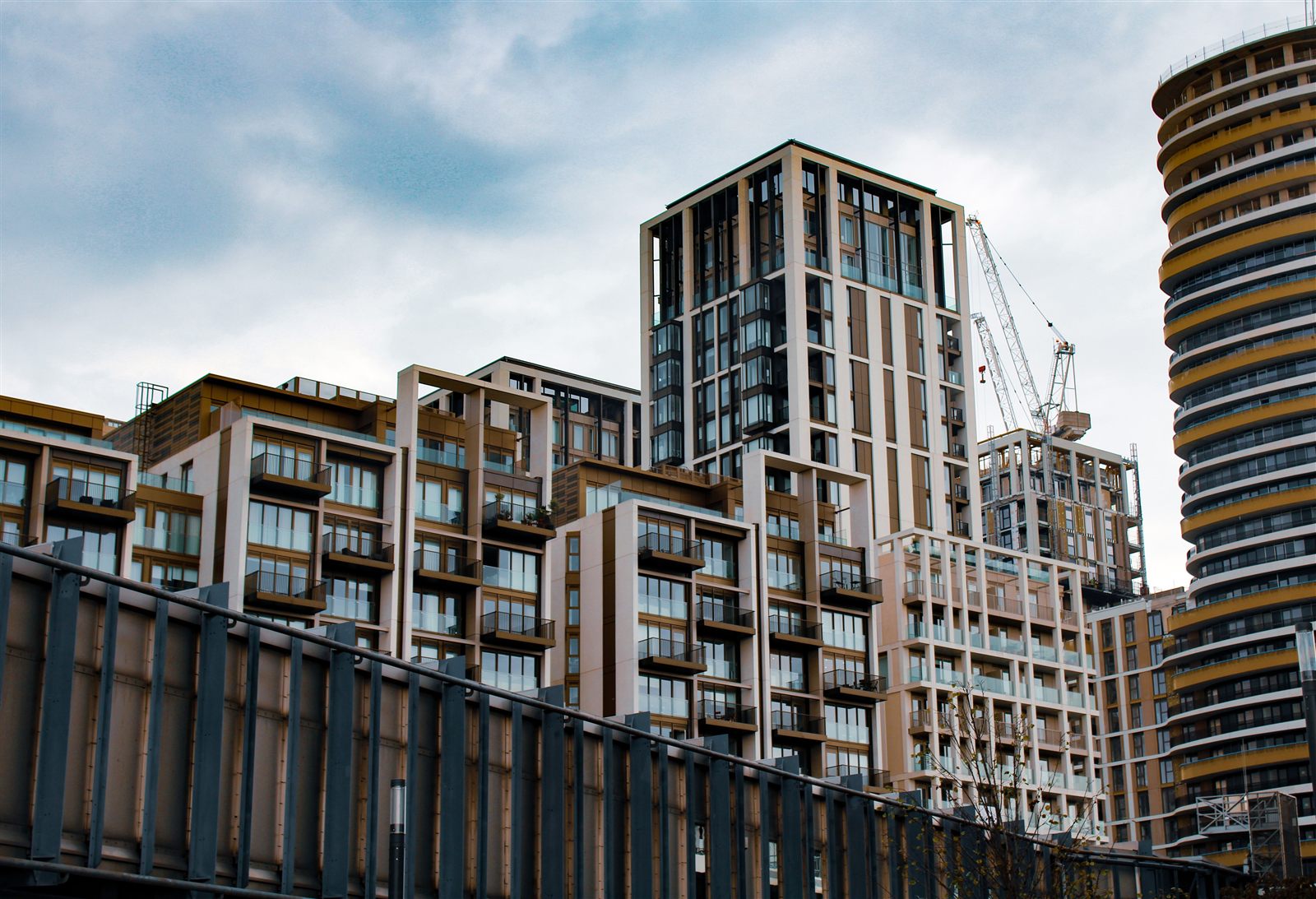
In short: Hammersmith & Fulham is preparing a new Local Plan to 2042, with adoption scheduled for late 2027. Until then the 2018 Local Plan and the London Plan 2021 apply, but the emerging plan will carry more weight as it progresses. If you are buying, extending or developing in the borough, check both.
Planning a project in Hammersmith or Fulham? Start with an initial complimentary 30-minute consultation.
If you own, are buying or plan to develop property in Hammersmith & Fulham, the rules that shape what you can build are being rewritten. The council is preparing a new Local Plan that will guide development in the borough up to 2042, replacing the plan adopted in 2018.
For most people a Local Plan feels remote, until it decides whether an extension, a conversion or a development site gets planning permission. Here is where the process stands, what applies today, and what to check before you commit to a project.
What is a Local Plan?
The Local Plan is the council’s main planning document. It sets the vision for the borough, the number of new homes and jobs it needs to deliver, policies on design, heritage, heights, housing and climate, and allocations for key development sites. Every planning application in the borough is assessed against it.
In Hammersmith & Fulham, the statutory development plan today is made up of:
- the Hammersmith & Fulham Local Plan, adopted in February 2018;
- the London Plan, adopted in March 2021.
Land within the Old Oak and Park Royal Development Corporation area is planned separately and is not covered by the borough’s Local Plan.
The timetable: from consultation to adoption
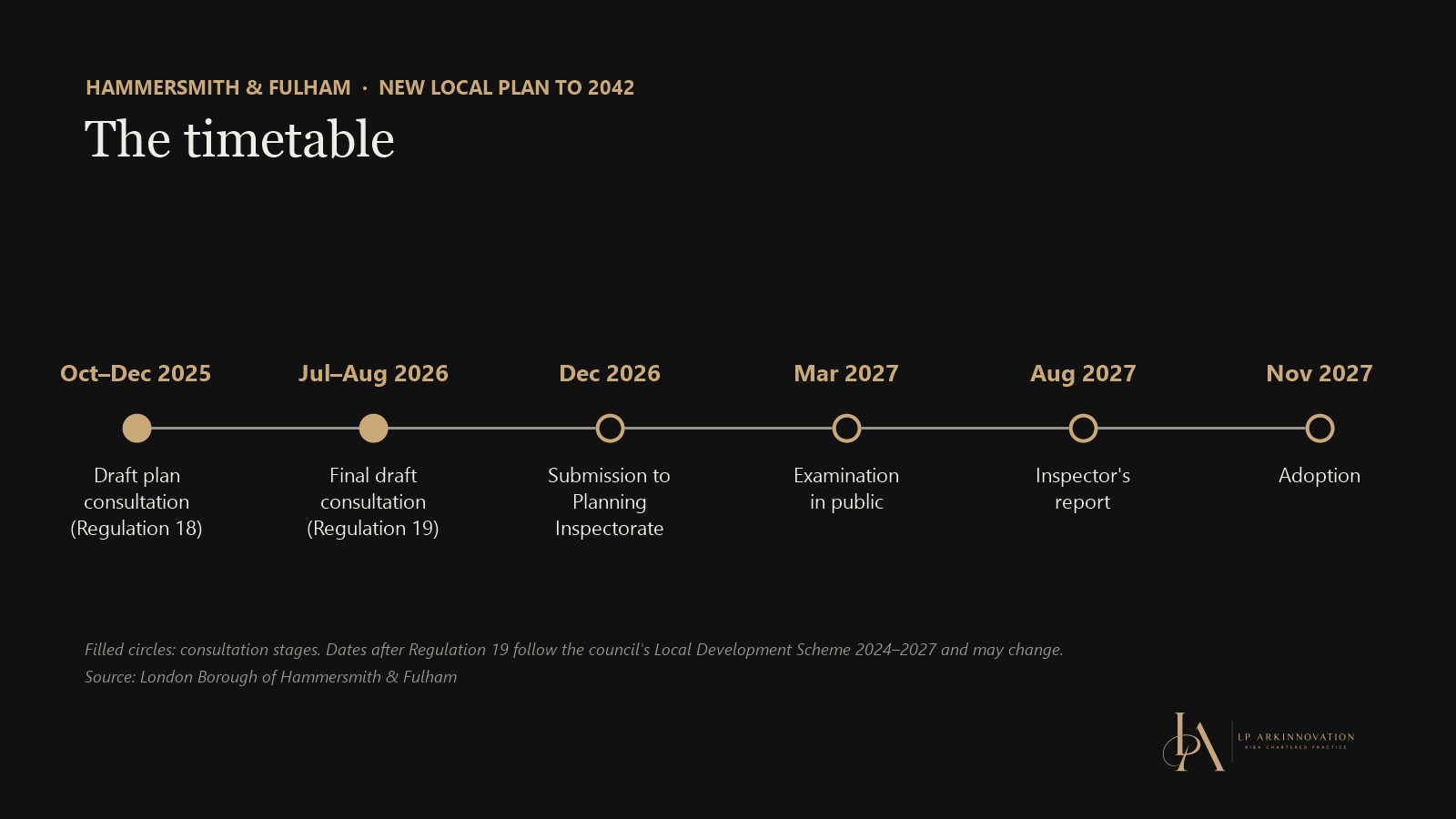
The council’s Local Development Scheme 2024–2027 sets out the programme for the new plan:
| Stage | Timetable |
|---|---|
| Draft plan consultation (Regulation 18) | Took place 29 October – 10 December 2025 |
| Final draft consultation (Regulation 19) | Scheduled for July/August 2026 |
| Submission to the Planning Inspectorate | Scheduled for December 2026 |
| Examination in public | Scheduled for March 2027 |
| Inspector’s report | Scheduled for August 2027 |
| Adoption | Scheduled for November 2027 |
Council papers show the final draft (Regulation 19) was approved for a six-week consultation in July 2026. Timetables can move, so it is worth checking the council’s website for the latest position.
At the Regulation 19 stage, comments are limited to whether the plan is sound, deliverable and legally compliant. After that, an independent Planning Inspector examines the plan, including whether it is in general conformity with the London Plan and national policy.
Does the new plan already matter?
Yes, and increasingly so. Until it is adopted, the 2018 Local Plan and the London Plan remain the starting point for decisions. But under the National Planning Policy Framework (policy DM4), emerging plans can be given weight according to how advanced they are, how significant the unresolved objections are, and how closely they follow national policy.
In practice, the further the new plan progresses, the more its policies will influence pre-application discussions and decisions. If you are preparing an application in 2027, you will need to show how it responds to both the adopted plan and the emerging one.
What to check before you buy, extend or develop
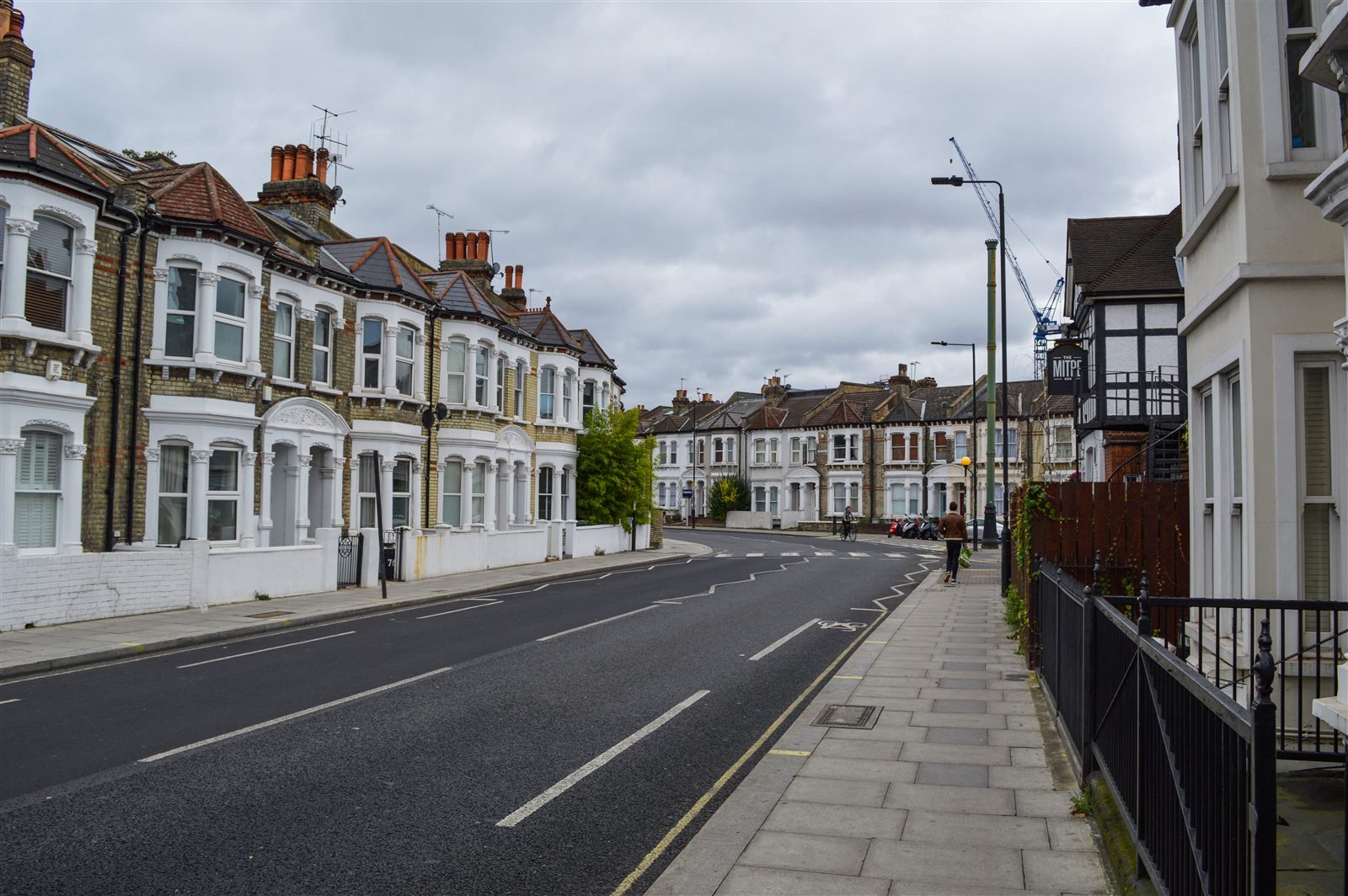
The council’s evidence base gives a clear idea of the themes the new plan is addressing. For property owners and investors, these are the ones I would watch most closely:
- Heights and densities. A Heights and Densities Assessment and Design Codes are part of the evidence. They will shape where taller or denser buildings may be acceptable, and where they will not.
- Heritage and conservation areas. The borough has many conservation areas, and the council notes that their boundaries have changed since the 2018 Policies Map was published. Always check the current boundary and any Article 4 Directions before you assume what you can build.
- Housing need and mix. A new Strategic Housing Market Assessment will inform the size and type of homes the council wants, which affects conversions and new schemes.
- Climate and viability. A Carbon Offset Cost Viability Study and a whole-plan viability study sit alongside flood risk work, so expect sustainability requirements to remain a central test.
- Area guidance. The council has said it will consider new or updated guidance, including a South Fulham Riverside SPD, a Hammersmith and Fulham Riverfront SPD, and updates to the Hammersmith Town Centre, Railway Arches, Affordable Workspace and Climate Change SPDs.
What this means for you
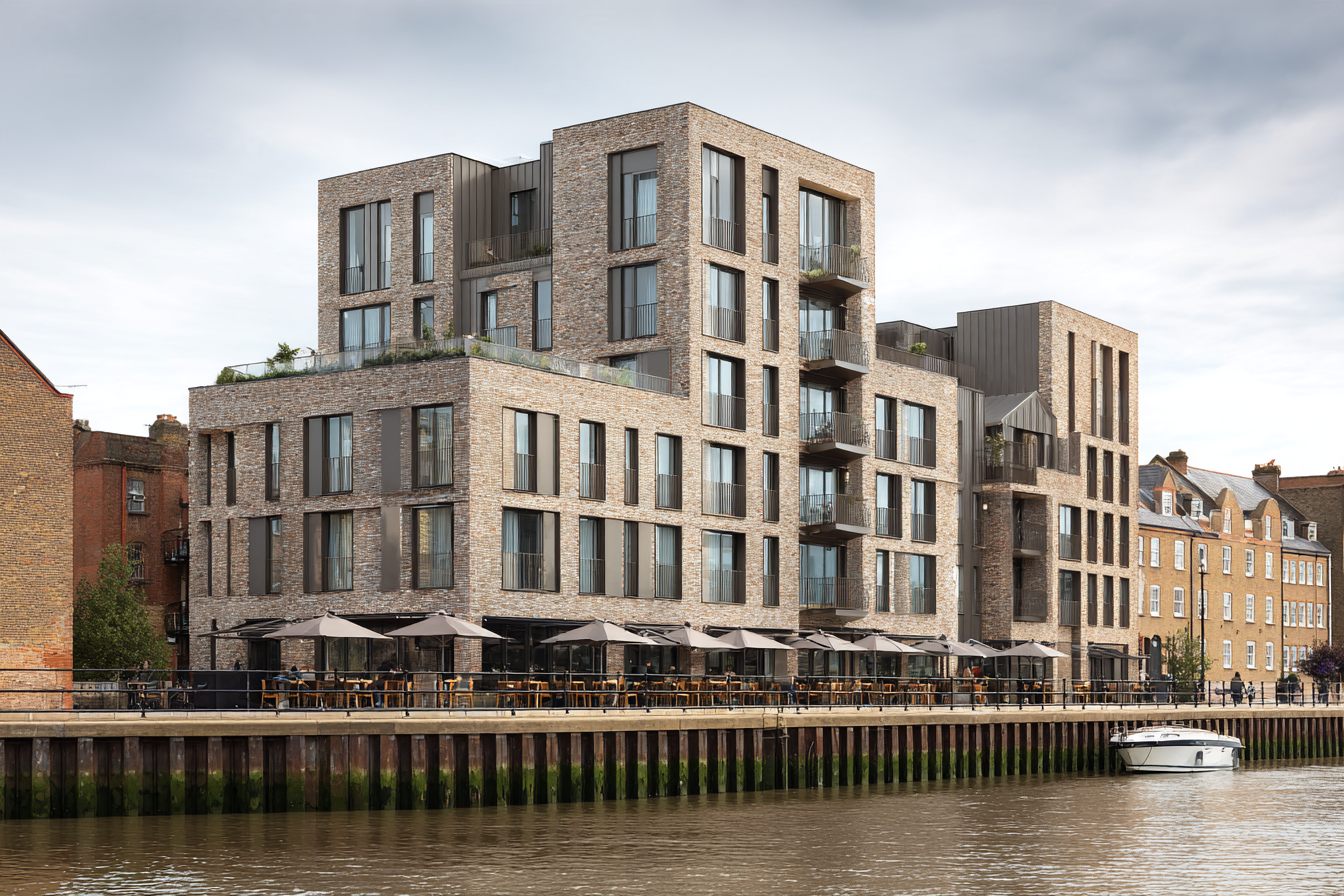
Homeowners planning an extension, loft or basement should design against today’s policies, but keep an eye on emerging design and heritage guidance, especially in conservation areas.
Investors buying in the borough should treat the emerging plan as part of their due diligence: a site’s value can rise or fall depending on how future policies on height, density and use apply to it.
Developers should engage early. Pre-application advice, a clear response to both the adopted and emerging plan, and a well-evidenced design strategy are the best way to reduce planning risk while the policy framework is changing.
Conclusion
The new Hammersmith & Fulham Local Plan will shape the borough for the next fifteen years. The rules are not changing overnight, but they are changing, and the projects that succeed will be those designed with both the current and the emerging policies in mind.
If you are planning a project in Hammersmith or Fulham and want to understand how the Local Plan affects it, book an initial complimentary 30-minute consultation.
Related: Investing in a conservation area: opportunity or expensive mistake? · The hidden cost of ignoring the masterplan
Frequently Asked Questions
When will the new Hammersmith & Fulham Local Plan be adopted?
The council’s timetable schedules adoption for November 2027, after independent examination. Dates can change, so check the council’s website for the latest position.
Which Local Plan applies to planning applications now?
The Hammersmith & Fulham Local Plan adopted in 2018, together with the London Plan 2021. The emerging plan may be given increasing weight as it progresses.
Does the Local Plan cover Old Oak and Park Royal?
No. Land within the Old Oak and Park Royal Development Corporation area is planned separately.
Do I need planning permission for an extension in a conservation area in Hammersmith & Fulham?
Often yes, as permitted development rights are more limited in conservation areas and some are removed by Article 4 Directions. Check the current conservation area boundaries and seek advice before you start.
Do I need planning permission in Hammersmith & Fulham while the new Local Plan is being prepared?
Yes, for most extensions and alterations that go beyond permitted development. Applications are decided against the adopted 2018 Local Plan and the London Plan 2021, but the emerging plan can carry weight as it progresses, so it is worth checking both before you apply. A short consultation with an architect at an early stage can tell you which policies apply to your property.