The estimated reading time for this article is 5 to 6 minutes.
Luxury residential architecture is no longer defined by size or cost alone. In today’s market, true luxury lies in the quality of space, clarity of design, and the experience it offers.
Expansive homes must go beyond generous square footage. They need to create environments that feel coherent, comfortable, and emotionally engaging. Without careful architectural control, large residences risk becoming fragmented, overwhelming, or lacking intimacy.
The most successful luxury homes are those where scale, light, materiality, and spatial organisation are orchestrated into a unified experience. Ultimately, luxury is not about how large a space is, but about how it is perceived and lived.
Scale, Proportion and Spatial Balance
Designing large residences requires precise control of scale and proportion. While expansive spaces offer opportunities for grandeur, they must remain connected to human experience.
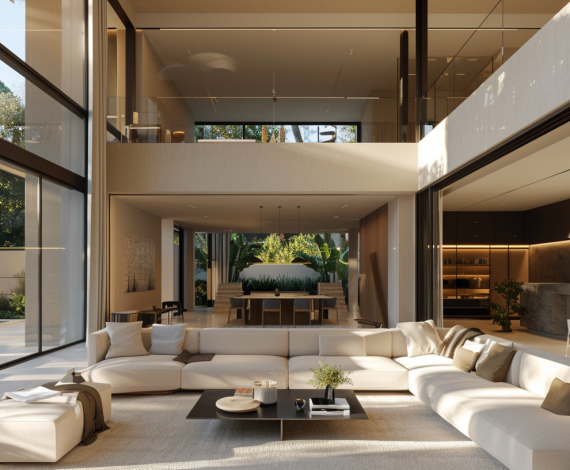
Double-height living areas, generous entrance halls, and open-plan layouts are common in luxury homes. However, without a clear spatial hierarchy, these features can feel impersonal.
Successful design balances:
Grand volumes with intimate zones
Visual impact with comfort
Openness with spatial definition
Proportion plays a key role. Well-balanced spaces feel calm and harmonious, while poorly proportioned ones can feel uncomfortable regardless of size.
Transitional elements such as corridors, staircases, and galleries are equally important. They create rhythm and continuity, guiding movement through the home and ensuring a cohesive architectural experience.
Spatial Zoning and Functional Clarity
In expansive luxury residences, spatial zoning is essential to maintain usability and coherence.
Without a clear layout, large homes can feel disjointed and inefficient. A well-structured plan typically organises the residence into three main zones:
Public Spaces
Living rooms
Dining areas
Entertainment zones
These spaces are designed for openness and social interaction, often connected visually and physically to outdoor areas.
Private Spaces
Bedrooms
Family lounges
Home offices
These areas prioritise privacy, comfort, and retreat, positioned away from high-activity zones.
Service Areas
Kitchens
Storage
Technical and staff spaces
Careful integration ensures functionality without disrupting the elegance of the main living areas.
Clear zoning allows the home to function seamlessly while maintaining a strong sense of architectural order.
Natural Light, Views and Atmosphere
Natural light is one of the most defining elements of luxury architecture. It shapes space, mood, and perception.
In expansive residences, daylight must be carefully orchestrated to avoid flat or overly exposed environments.
Key strategies include:
Orienting main living spaces toward optimal sunlight
Using floor-to-ceiling glazing to frame views
Introducing skylights, courtyards, and clerestory windows
These elements allow light to penetrate deep into the building, enhancing both primary spaces and circulation areas.
Natural light also creates a dynamic experience. As it changes throughout the day, it highlights textures, materials, and architectural details, transforming the atmosphere continuously.
The connection between light and landscape is essential, it reinforces the relationship between the home and its context.
Materiality and Architectural Identity
Materials are fundamental in defining the identity of a luxury residence. They influence not only aesthetics, but also tactility, durability, and perception.
High-end residential architecture often combines:
Stone for solidity and permanence
Timber for warmth and texture
Glass for openness and connection
Metal for precision and refinement
The key lies in composition and contrast. Combining smooth and textured surfaces, light and dark tones, or heavy and lightweight materials creates depth and richness.
Craftsmanship is equally critical. The quality of detailing, joints, finishes, transitions elevates the overall design.
Timeless materials that age well contribute to the long-term value of the property, ensuring that the architecture remains relevant and refined over time.
Indoor–Outdoor Integration
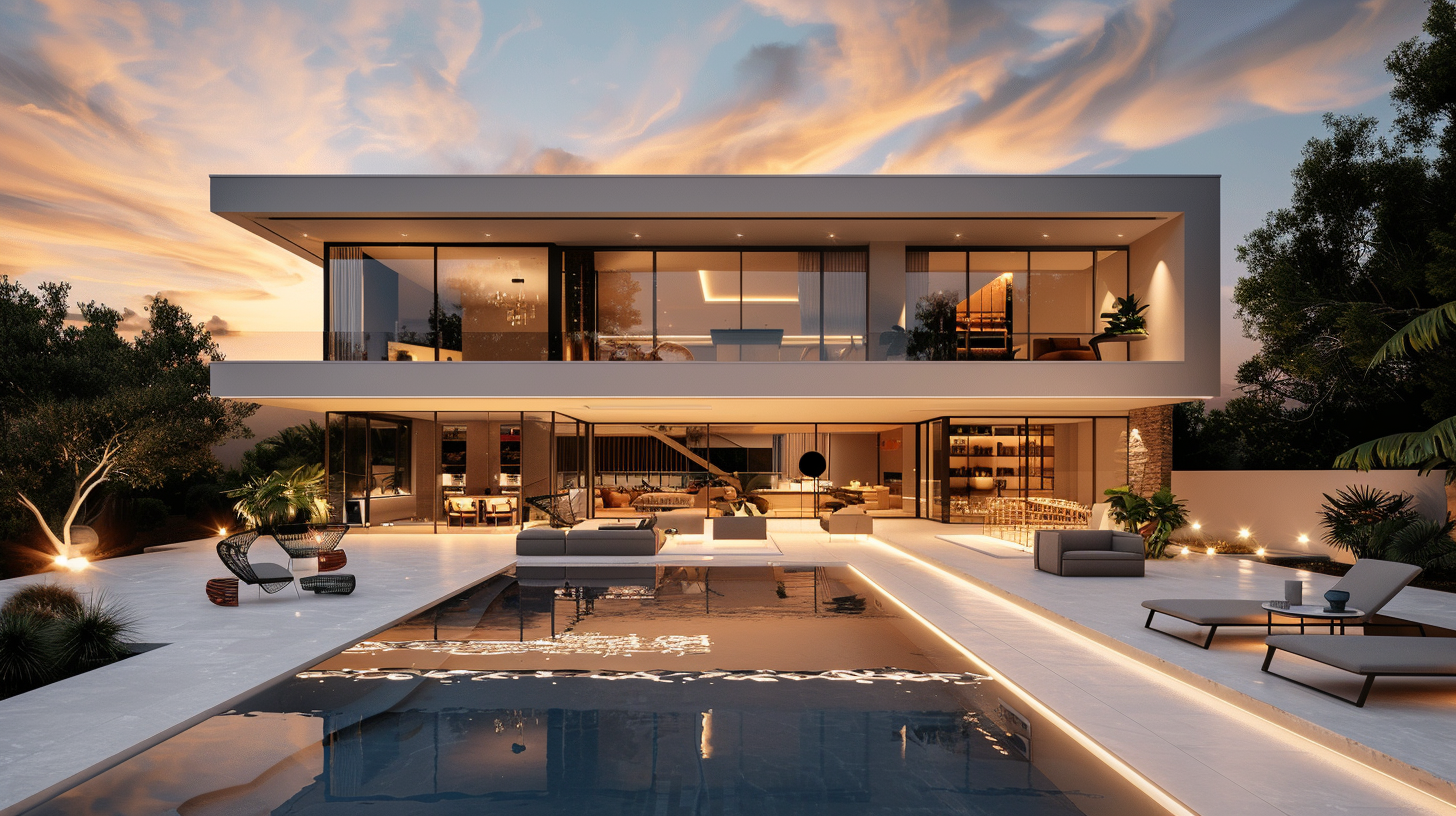
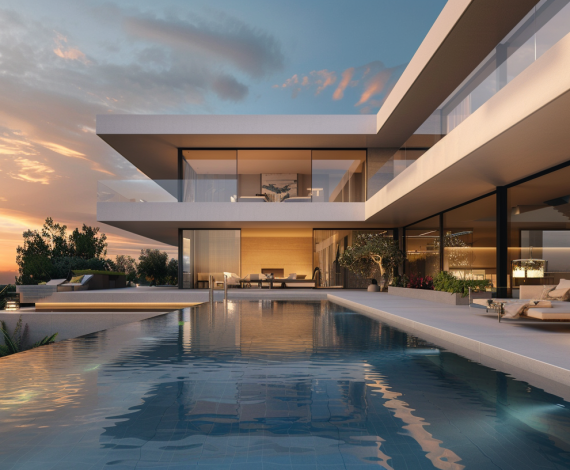
Modern luxury homes are defined by the seamless relationship between interior spaces and the surrounding landscape.
Rather than being isolated objects, these residences are conceived as part of a continuous spatial experience.
Key architectural features include:
Sliding glass walls and retractable façades
Expansive terraces and outdoor living areas
Direct connections between interior and garden spaces
This integration enhances lifestyle by extending living spaces outdoors and increasing interaction with nature.
Landscape design plays a crucial role:
Framing views
Enhancing privacy
Softening architectural volumes
The result is a home that feels both open and protected, offering a balanced relationship between architecture and environment.
Technology, Comfort and Sustainability
Contemporary luxury is increasingly defined by performance, comfort, and environmental responsibility.
Smart Home Systems
Advanced technology allows seamless control of:
Lighting
Climate
Security
Shading
These systems improve efficiency while enhancing everyday living.
Acoustic Comfort:
In large homes, sound control is essential. High-performance insulation and thoughtful design ensure quiet, comfortable environments, particularly in multi-functional spaces.
Sustainable Design:
Luxury architecture today must also address environmental impact. Key strategies include:
High-performance building envelopes
Energy-efficient systems
Renewable energy integration
Sustainable material selection
Sustainability is no longer optional; it is a core component of long-term value.
Conclusion: Designing for Experience, Not Just Scale
Expansive luxury residences require more than size, they demand clarity, balance, and intention.
The most successful projects are those where:
Scale is controlled
Spaces are organised
Light is orchestrated
Materials are thoughtfully selected
Technology enhances comfort
Sustainability is integrated from the outset
When these principles come together, large homes become more than impressive structures, they become refined living environments that support both lifestyle and long-term value.
True luxury lies in the experience of space, and in its ability to endure over time.
As a RIBA Chartered Practice, we work closely with private clients, property developers, and commercial partners—guiding them from concept to completion with innovative, tailored architectural solutions that bring their visions to life.