The estimated reading time for this article is 5 to 6 minutes.
Architecture has always been deeply connected to the way societies live, evolve, and organise themselves. From traditional multi-generational homes to the rise of suburban family houses in the 20th century, buildings have mirrored social structures and cultural values. Today, however, we are witnessing a profound demographic shift: the steady growth of single-person households and smaller families. This transformation is not confined to one region—it is a global trend, reshaping both urban and suburban living.
In many countries, delayed marriage, declining birth rates, and increased life expectancy are producing societies where the traditional large family is no longer the dominant model. Instead, individuals are living alone longer, couples are choosing smaller households, and cities are adapting to denser, more flexible forms of housing. For architects, urban planners, and developers, this raises a critical question: how should the built environment evolve to support this new social reality?
This article explores the intersection of architecture and sociology, asking whether we are moving toward a “single society” and what this means for housing design, community life, and the property market. By decoding these shifts, architects can design spaces that not only reflect but also enhance the way people live today.
Society in Transition
Across the globe, societies are undergoing a demographic transformation that is reshaping the way people live. One of the most significant shifts is the rise of smaller households and single-person living. In Europe, nearly one-third of households are now occupied by a single individual, while in cities such as Tokyo, London, and New York, the number of single residents has reached record highs. This trend reflects broader cultural and economic changes: delayed marriage, declining birth rates, and increasing life expectancy.
An ageing population also plays a key role. More people are living independently well into old age, driving demand for smaller, accessible homes tailored to individual needs. Meanwhile, younger generations—often constrained by high housing costs—are choosing compact apartments or co-living arrangements rather than large family homes.
Urbanisation further accelerates this trend. As cities expand, high-density living becomes the norm, favouring smaller units over sprawling houses. Culturally, independence and flexibility are increasingly valued, challenging the traditional model of the extended or nuclear family.
These transitions are not temporary fluctuations but structural shifts in how societies function. For architects and planners, the challenge is clear: to design environments that accommodate evolving household structures while fostering wellbeing and community.
Impact on Housing Demand
The rise of single-person households and smaller families is profoundly influencing housing demand. Where once the ideal was a spacious family home, today’s property market increasingly favours compact, efficient, and flexible units. Developers in cities such as London, Berlin, and Hong Kong are responding with micro-apartments, co-living complexes, and modular housing designed to maximise value within limited square footage.
Affordability is a central factor. With property prices and rents outpacing wages in many metropolitan areas, smaller homes are often the only accessible option for young professionals and retirees alike. Yet compact does not mean basic: buyers and tenants expect high-quality finishes, smart storage solutions, and integrated technology that supports modern living.
This shift is also creating demand for shared amenities—from communal kitchens and lounges to co-working spaces and wellness facilities—that compensate for reduced private space. In suburban areas, smaller households are prompting developers to rethink traditional housing typologies, favouring townhouses or apartments over large detached homes.
For investors and planners, the message is clear: demographic changes are reshaping not only how much space people need but also how they want to live. The future housing market will reward developments that combine efficiency with lifestyle appeal.
Architecture as a Social Response
As society shifts toward smaller households, architecture must adapt by creating homes that are compact yet dignified, efficient yet comfortable. The challenge is to design for individuals or couples without reducing quality of life. This requires innovation in layout, materials, and the relationship between private and shared space.
For single residents, functionality becomes paramount. Flexible floor plans, where a living area can double as a workspace or guest room, maximise usability in compact footprints. Smart storage solutions, multi-purpose furniture, and built-in cabinetry help reduce clutter while enhancing comfort.
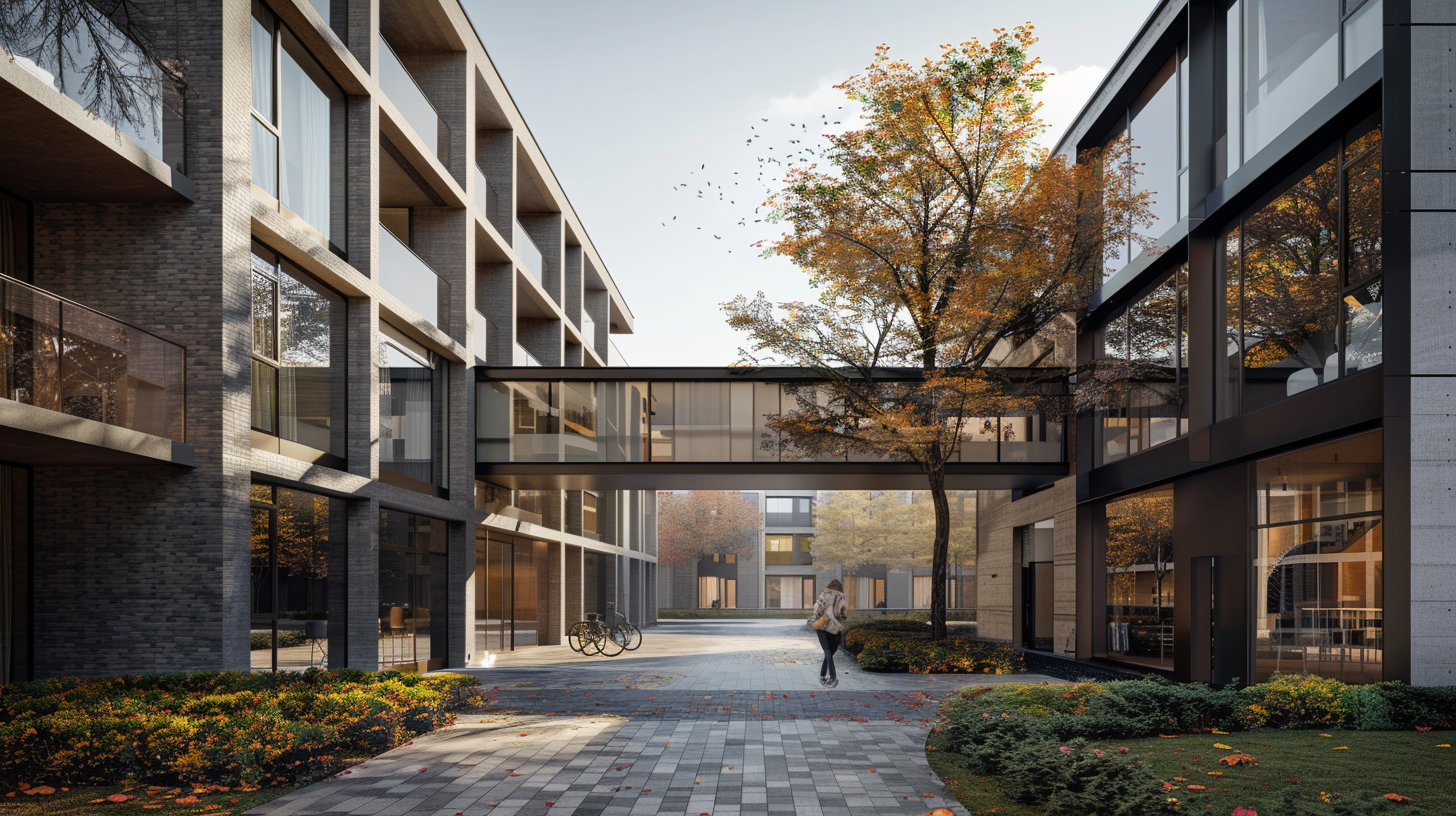
At the same time, smaller homes must not lead to isolation. Architects are increasingly integrating shared amenities—rooftop gardens, communal kitchens, or fitness spaces—into residential developments, fostering community and social interaction.
Light and openness are also essential. Generous windows, balconies, and biophilic elements can make even modest interiors feel expansive and uplifting.
By responding to these societal changes, architects have the opportunity not only to provide housing but to reshape lifestyles, ensuring that smaller households thrive in environments that balance independence with connection.
Urban Planning and Community
The growth of single-person households and small families has implications far beyond individual housing units—it reshapes the very fabric of urban planning. As private living spaces become smaller, the importance of public and shared spaces increases. Parks, plazas, libraries, and community centres take on a new role as extensions of the home, offering opportunities for connection, recreation, and wellbeing.
High-density living also requires smarter infrastructure. Cities must adapt with mixed-use developments that integrate housing, workspaces, retail, and leisure within walkable distances. This reduces reliance on commuting, fosters social cohesion, and supports sustainable lifestyles.
Public transport, cycling infrastructure, and pedestrian-friendly streets are equally vital, especially for residents without cars. Meanwhile, inclusive design ensures accessibility for ageing populations and people living alone.
Urban planners and architects must therefore focus not only on efficiency but on building community within density. Thoughtful zoning, affordable housing initiatives, and investment in cultural and social facilities can prevent isolation while reinforcing the sense of belonging.
In an age where households are shrinking, the city itself becomes a shared living room. The challenge is to design urban environments that balance individual privacy with collective identity.
Cultural and Market Considerations
The transition toward smaller households is not uniform; it is shaped by cultural norms, economic realities, and market dynamics. In many Western cities, single living is celebrated as a marker of independence, driving demand for micro-apartments and co-living arrangements. By contrast, in parts of Asia and the Middle East, multi-generational living remains common, though even here urban pressures are gradually encouraging smaller, nuclear households.
Property markets are responding accordingly. Developers in global cities see strong rental demand for compact units targeted at young professionals, while luxury markets are adapting with high-spec one- and two-bedroom apartments. At the same time, ageing populations are generating interest in downsized, accessible homes that allow seniors to live independently.
However, cultural expectations still influence resale value and investment. In markets where large family homes retain prestige, smaller units may face slower appreciation. Successful development strategies therefore balance local tradition with modern trends, ensuring that housing aligns with both market demand and cultural identity.
Conclusion
The relationship between architecture and sociology has never been more visible than in today’s shift toward smaller households and single living. What once was an exception is quickly becoming a defining feature of modern society, reshaping how homes, communities, and cities must be designed. This trend is not temporary—it reflects long-term demographic, cultural, and economic changes that architects and planners cannot ignore.
The challenge lies in creating housing that balances individual needs with collective wellbeing. Compact apartments, flexible layouts, and shared amenities can support the realities of single living, while thoughtful urban planning ensures that shrinking households do not lead to social isolation. Equally, cultural differences and market dynamics must be respected to deliver developments that are both socially relevant and financially sustainable.
Ultimately, architects are not just designing buildings; they are shaping the social fabric of the future. By embracing these demographic changes, the profession has the opportunity to create environments that are inclusive, resilient, and reflective of the way society truly lives today.
As a RIBA Chartered Practice, we work closely with private clients, property developers, and commercial partners—guiding them from concept to completion with innovative, tailored architectural solutions that bring their visions to life.